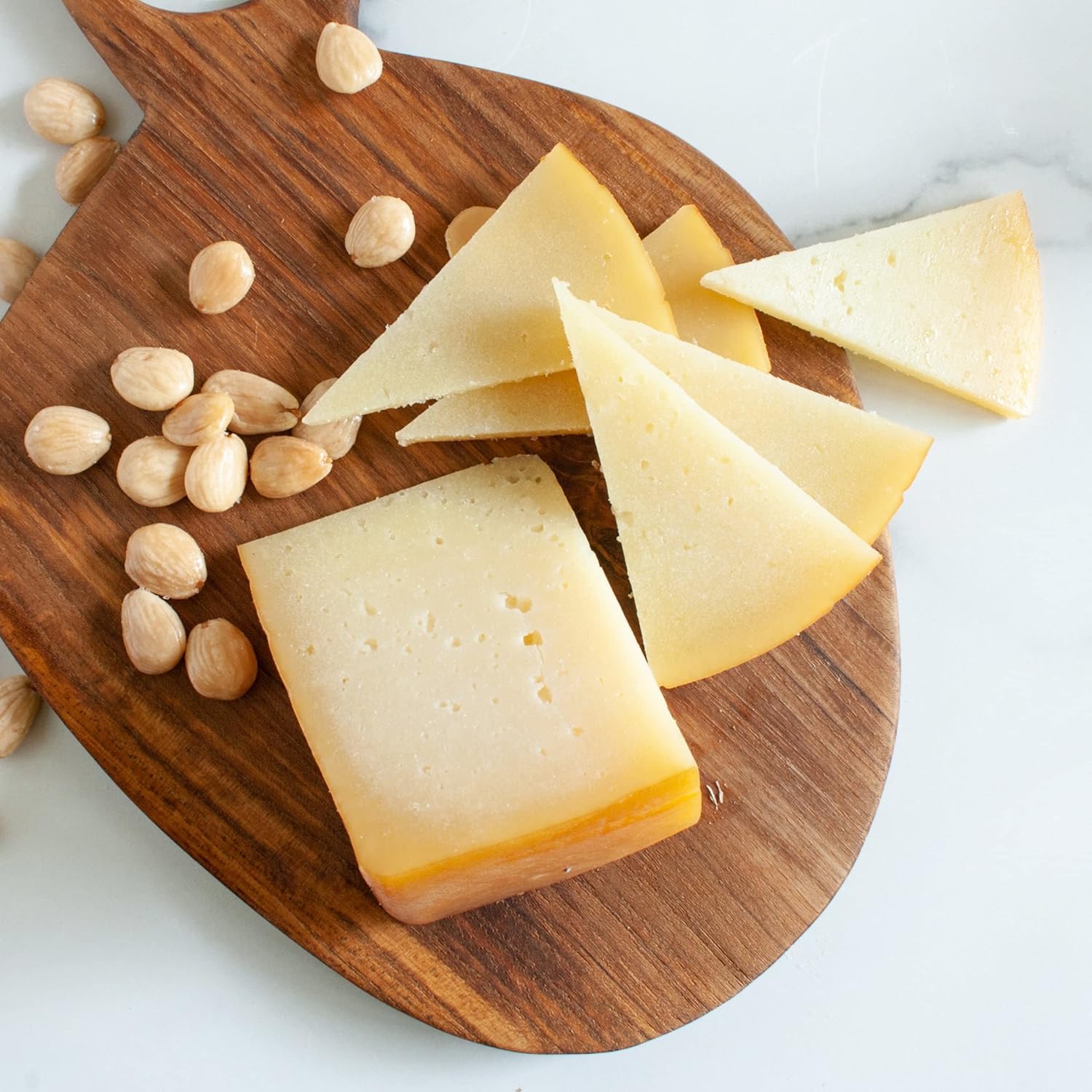
When someone hands you a wedge of cheese, where it came from matters as much as what it tastes like. Terroir — a French word that literally means “land” but refers to the specific combination of climate, soil, grass, and tradition that shapes a food’s flavor — is the reason a sheep’s milk cheese from the Pyrenees tastes nothing like one made fifty miles away in a different valley. Most imported European cheese baskets are curated by country or region, and that origin story is doing a lot of work: it determines the flavor range you’re sending, the styles of accompaniments that make sense alongside the cheese, and whether the recipient is going to feel delighted or quietly confused. This guide runs a direct comparison across the four most common imported assortment categories — French, Spanish, British, and Italian — so you can make that decision with your eyes open, not just based on which label looks most impressive.
| EDITOR'S PICK[igourmet Spanish Cheese Tasting](https://www.amazon.com/dp/B0000WOF7M?tag=greenflower20-20)… | Mid-tier[igourmet French Cheese Tasting](https://www.amazon.com/dp/B08JC8G3MP?tag=greenflower20-20)… | Budget pick[Spanish Cheese Assortment 2 lbs](https://www.amazon.com/dp/B0070XQH2A?tag=greenflower20-20)… | |
|---|---|---|---|
| Origin region | Spain | France | Spain |
| Cheese varieties | 4 types | — | 4 types |
| Includes crackers | ✓ | — | — |
| Includes meat | ✗ | ✗ | ✓ |
| Weight | — | — | 2 lbs |
| Gift box | ✓ | ✓ | — |
| Price | $139.95 | $124.95 | $65.99 |
| See on Amazon → | See on Amazon → | See on Amazon → |
What’s Actually Inside Each Country’s Assortment: A Flavor and Format Breakdown
Before you commit to a $150 imported assortment from iGourmet, Zingerman’s, or Murray’s Cheese, it pays to understand what the origin geography is actually promising you. These aren’t interchangeable boxes of “fancy foreign cheese” — each country’s cheesemaking tradition has a distinct center of gravity.
French assortments lean on variety as the organizing principle. A well-built French basket typically includes at least one bloomy-rind cheese (Brie or Camembert, with the white edible rind that develops during aging), one pressed cooked wheel like Comté or Gruyère, and often a blue-veined option such as Roquefort. The Saveur guide to French cheese notes that France has over 1,000 named cheese varieties, which means even a six-piece assortment can span an enormous sensory range — from the mild, buttery softness of a triple-crème to the mineral, nutty intensity of a 24-month Comté. That range is a gift for diverse recipient groups, but it also means French baskets require the most interpretive guidance if your recipient isn’t already a cheese person. Accompaniments typically pair well across the board: fruit pastes, walnuts, and crusty bread do heavy lifting.
Spanish assortments have a tighter, more cohesive flavor signature. The dominant styles are firm and semi-firm sheep’s and goat’s milk cheeses — Manchego (aged sheep’s milk from La Mancha, with its distinctive crosshatch rind), Idiazabal (smoked Basque sheep’s milk), and Garrotxa (semi-firm aged goat’s milk from Catalonia). Food & Wine’s guide to Spanish cheese points out that Spain’s cheesemaking tradition is deeply tied to pastoral shepherding culture, which means animal fat, lanolin, and grassy, herbaceous notes run through most of the lineup. The flavor profile skews savory and slightly gamey in a way that sophisticated palates love — but it’s a narrower lane than France. The upside: Spanish baskets pair exceptionally well with cured meats, Marcona almonds, and quince paste (membrillo), making them naturally suited to full charcuterie builds.
British assortments have experienced a quiet resurgence that most American buyers still underestimate. Yes, Cheddar is British — but the Cheddar in a quality UK-focused basket is nothing like the block from a grocery store. Serious Eats’ overview of British cheeses highlights that “traditional clothbound Cheddar” (aged in cloth rather than vacuum-sealed plastic) develops crumbly, crystalline texture and complex earthy flavor over 12–18 months. Beyond Cheddar, strong British baskets include Stilton (the protected-designation blue cheese from the East Midlands, with a creamier, less aggressive bite than Roquefort), Wensleydale (bright, slightly honeyed, crumbly), and occasionally a washed-rind cheese like Stinking Bishop. The flavor range skews toward the rich, buttery, and savory — crowd-pleasing in the best sense — which makes British assortments the safest bet when you’re genuinely unsure of the recipient’s adventurousness. The pairings are approachable: crackers, chutneys, dried fruit.
Italian assortments occupy a category that most buyers already think they know — and usually don’t, because the export market is dominated by just three names: Parmigiano-Reggiano, fresh mozzarella, and Gorgonzola. A well-sourced Italian basket from a retailer like Murray’s or Zingerman’s moves well past these anchors. Bon Appétit’s guide to Italian cheeses worth seeking out highlights Taleggio (washed-rind, pungent, spreadable), aged Pecorino varieties from Sardinia and Tuscany, and Piave Vecchio (a firm cow’s milk cheese from the Veneto with a butterscotch-sweet depth). The challenge with Italian assortments is that the really interesting cheeses — the ones that justify a premium price — require the retailer to have invested in sourcing beyond the commodity tier. Confirm the producer names before you order. Italian baskets pair naturally with honey, fig preserves, and cured meats; they also tend to anchor the most visually dramatic presentations.
By the Numbers: A Quick Comparison
| Origin | Typical Styles | Flavor Range | Best Pairing Anchor | Recipient Risk Level |
|---|---|---|---|---|
| French | Soft, bloomy, blue, aged | Very wide | Fruit paste + walnuts | Medium — variety can overwhelm |
| Spanish | Firm to semi-firm, sheep/goat | Narrow, savory | Charcuterie + quince | Low-Medium |
| British | Aged hard, blue, crumbly | Medium, buttery | Chutney + crackers | Low — most accessible |
| Italian | Firm, washed-rind, soft | Wide, depends on sourcing | Honey + fig + cured meat | Medium-High (sourcing-dependent) |
Recipient risk level reflects how likely the assortment is to contain flavors or textures an unfamiliar recipient finds challenging.
Where Retailer Sourcing Quality Separates Good from Great
This is the variable that matters most once you’ve chosen a country — and it’s where procurement professionals and serious hosts need to press hard before committing.
The Spruce Eats’ overview of European cheese regions makes the point clearly: Protected Designation of Origin (PDO) certification means a cheese can only legally be called by its name if it was made in a specific region under specific methods. Parmigiano-Reggiano is PDO. So is Manchego, Stilton, Comté, and Roquefort. An assortment that lists “Spanish sheep’s milk cheese” without naming the wheel is almost certainly not Manchego — it’s a domestic or generic imitation that legally cannot use the protected name. This distinction doesn’t show up in marketing copy. You have to read the product spec sheet.
Murray’s Cheese is currently among the most transparent retailers at the upper end. Their custom build program publishes producer names, PDO status, and aging parameters at the individual cheese level. Procurement buyers sourcing 25–100 unit corporate packages can verify the actual producer origin, which matters when you’re presenting a basket as a premium client gift that reflects institutional taste.
Zingerman’s hand-packed collections are similarly rigorous on provenance — their editorial descriptions typically name the creamery, the region, and the affineur (the specialist, sometimes called an “affinage” practitioner, who oversees the final aging of the cheese in a dedicated cave or cellar environment). That last detail matters because the affinage process can elevate or ruin a wheel; Zingerman’s naming the affineur signals they’ve verified the supply chain, not just the country of origin.
iGourmet and Goldbelly operate at a slightly different layer: they aggregate from multiple producers and typically publish more detail than mass-market retailers but less than Murray’s or Zingerman’s. For mid-range assortments in the $75–$150 range, they’re reliable, but verify that PDO names appear in the item description — not just the country flag in the product imagery.
At the entry tier (Harry & David, Hickory Farms), European-origin cheeses are generally processed or commodity-grade. There’s nothing wrong with that for a casual gift, but you won’t find genuine Comté or clothbound Stilton in a $45 basket. The honest advice here: if the European provenance of the cheese is part of the gift’s value proposition, spend at least $95 and buy from a specialty retailer.
Matching Origin to Occasion, Recipient, and Budget
Here’s where the decision frame collapses to something actionable.
Corporate gifting, 25+ units, $200–$400 per basket: French or Italian assortments from Murray’s or Zingerman’s signal the highest level of curatorial sophistication — but only if the retailer is publishing individual producer names. French is the safer prestige play because the category is legible to recipients across cultures; Italian signals a more personal, food-obsessive sensibility that works brilliantly for clients in hospitality, design, and food industries. Spanish is an underrated choice that over-delivers at this price point and photographs exceptionally well, which matters for corporate unboxing moments. British assortments at this tier are best reserved for recipients with a known anglophile or whiskey-adjacent palate.
Celebration hosting, $75–$150 board build: Spanish is the highest-efficiency choice for a charcuterie-anchored spread — the flavor profile is cohesive, the pairing logic is simple, and the visual drama of a whole Manchego wheel is hard to beat. British is the smart play if you want maximum crowd accessibility. French is the right call if you want to build a board that tells a story and you’re comfortable guiding guests through it.
First-time holiday gift, $65–$95: British assortments win on approachability, and at this price point the Cheddar-Stilton-Wensleydale combination is reliably pleasant for almost any recipient. It’s the pick where you can confidently say: the budget option is genuinely fine, and it won’t confuse anyone.
Dietary considerations: Spanish and British assortments are most easily adapted for gluten-free gifting because the natural pairings (nuts, fruit, charcuterie) are inherently GF-compatible. French assortments frequently include accompaniments with wheat-based components; verify separately. Italian baskets frequently include breadsticks or crackers as filler — confirm the ingredient list before ordering for a gluten-sensitive recipient.
The Decision Rule
If you’re choosing a European cheese assortment and you’re not sure where to start, apply this logic:
- Recipient is adventurous, occasion is impressive → French or Italian, Murray’s or Zingerman’s, verify PDO names in the spec
- Recipient is a food enthusiast, occasion is a shared meal → Spanish, iGourmet or Goldbelly, lean into the charcuterie pairing
- Recipient is unknown or broad audience, occasion is workplace or holiday → British, any specialty retailer at $75+
- Budget is under $65 → British from a reputable tier-one mass retailer; don’t overpromise the provenance story
The country on the label is the starting point, not the finish line. What separates a $95 assortment that genuinely delivers from one that coasts on geography is whether the retailer has done the sourcing work to put real PDO-certified, named-producer cheese in the box. Ask for the product spec sheet. If they can’t or won’t provide producer names, that’s the answer.